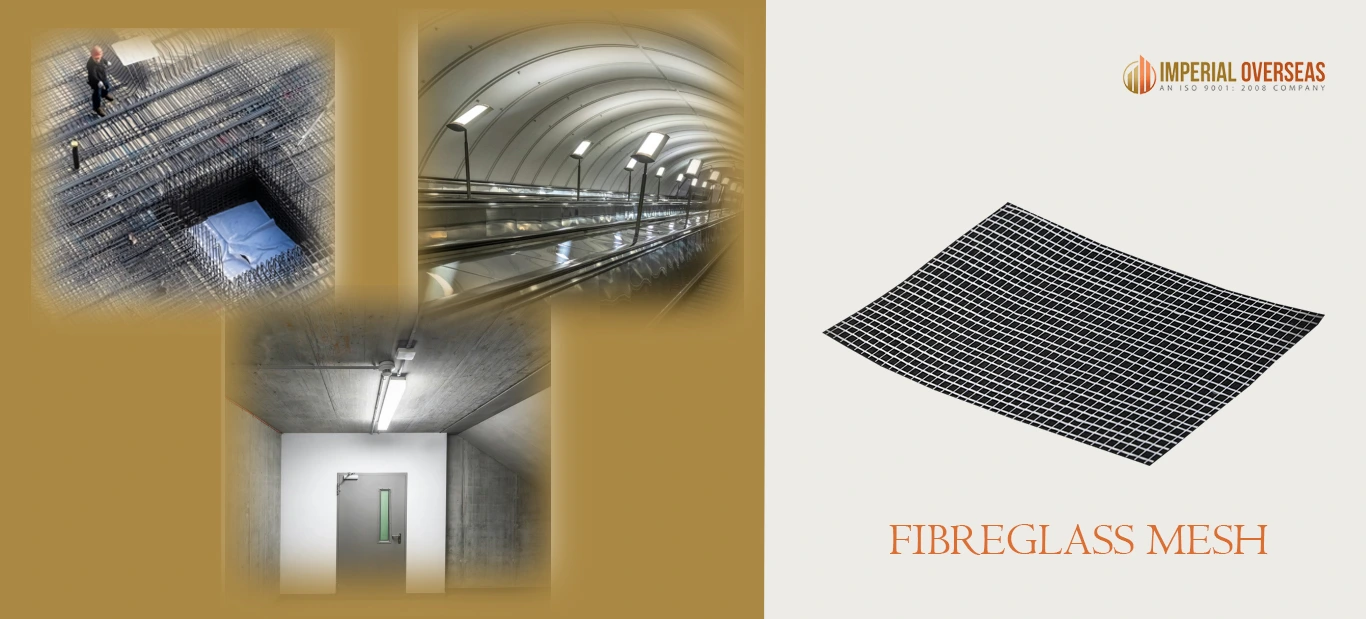
Fiberglass Mesh is manufactured by weaving Fibre Glass Yarn and applying a protective coating, resulting in a product with exceptional strength and resistance properties. It offers high alkali resistance, water resistance, thermal resistance, rot and mildew protection, and flexibility. The material is also resistant to ageing, which ensures long-term performance even under harsh weather conditions.
Available in different grades such as 45 GSM, 80 GSM, and 145 GSM, it can be adapted for specific construction needs.
These variations differ in tensile strength, grid size, and resin content, allowing professionals to choose the right specification for the intended waterproofing application. By reinforcing roof coatings with Fiberglass Mesh, wear and tear is significantly reduced, and the risk of cracks or leaks is minimized.
One of the primary uses of Fiberglass Mesh is in waterproofing roofs and terraces across various types of structures, including residential buildings, commercial complexes, hospitals, schools, and metro stations. When integrated into waterproof coatings, it acts as an excellent reinforcement layer, preventing the coating from peeling or breaking due to temperature fluctuations or mechanical stress.
The material’s high heat and chemical resistance also serve as an insulating barrier, reducing heat transfer from the roof and keeping the upper floors cooler. In addition to improving comfort, this heat insulation property helps lower energy costs by reducing the need for air conditioning.
Variants such as Fiberglass Net and Glass Woven Fabric are also employed for similar purposes, each offering specific advantages in terms of flexibility, tensile strength, and compatibility with different waterproofing compounds.
The performance of waterproofing reinforcement materials depends greatly on their technical specifications. For example, the 45 GSM coated alkali-resistant Fiberglass Mesh features a 2.5 mm x 2.5 mm grid size and tensile strength exceeding 600 N in the warp direction, making it suitable for light reinforcement applications. The 80 GSM variant, with a larger 5 mm x 5 mm grid, offers enhanced strength for medium-duty waterproofing, while the 145 GSM version delivers superior tensile strength over 700 N, ideal for heavy-duty reinforcement.
As building structures face increasing environmental challenges, advanced waterproofing solutions have become indispensable. The use of Fiberglass Mesh in roofs and terraces offers long-lasting protection against water infiltration, structural degradation, and thermal inefficiency.
With its high resistance to alkalis, water, temperature extremes, and mildew, this material ensures that waterproofing coatings remain intact for years. Whether in the form of Glass Fiber Mesh, Fiberglass Net, or Glass Woven Fabric, its reinforcement capabilities make it a reliable choice for architects, engineers, and contractors seeking to enhance building durability. By selecting the right GSM specification and following proper installation and storage guidelines, property owners can ensure optimal performance and extended service life for their waterproofing systems.