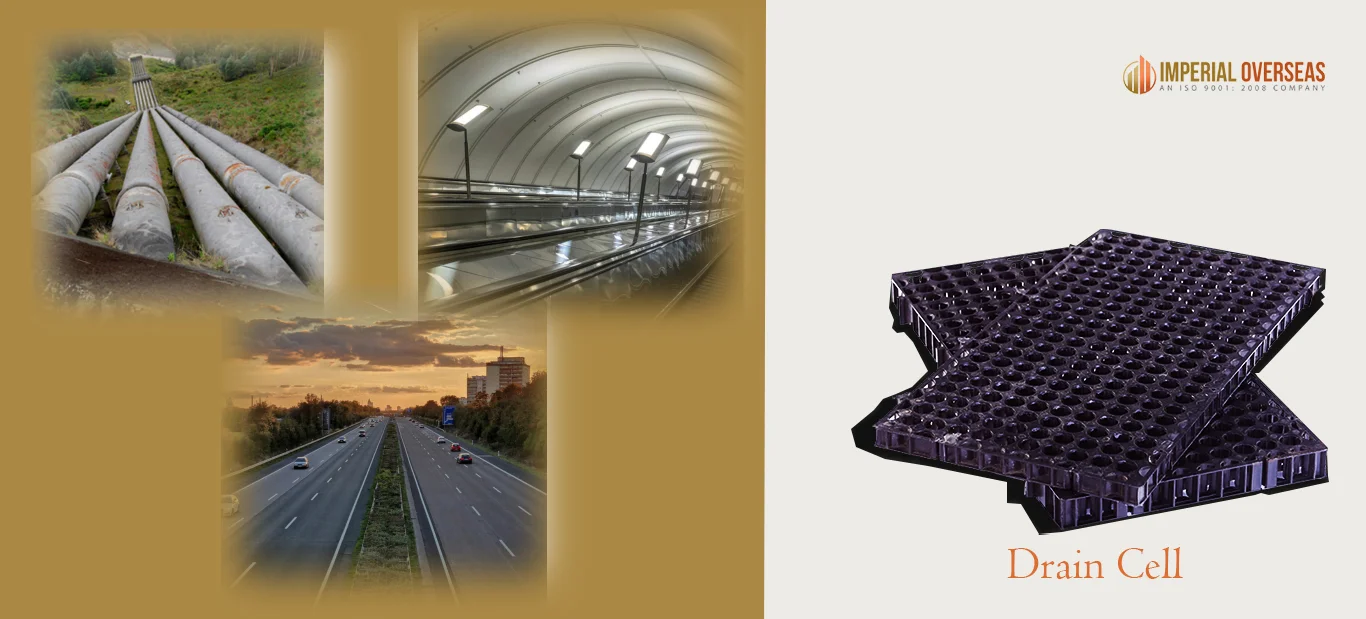
To keep infrastructure safe and last a long time, civil engineers need to handle subsurface water properly. The way that water is moved around influences how highways, tunnels, and big drainage systems work. Engineers enjoy the IMPTREX® DRAIN CELL drain cell technology because it is strong, light, and can be used in many ways. Recycled polypropylene modular drainage systems can handle heavy mechanical loads and a lot of water flow. Because they are modular and easy to install in different orientations, they are great for urban roadways and subterranean tunnel projects.
Rain, groundwater seepage, and other sources of moisture regularly touch the surface of roads. If there isn't enough drainage, water might pool under the pavement, which can lead to erosion, cracking, and failure. The 20mm drainage cell and similar products create a drainage layer below the surface that keeps roads from getting too wet and keeps the road foundation strong. IMPTREX® Drain Cells can handle the stress of traffic and maintenance equipment because they can hold up to 100 tons/sqm. The modular interlocking design also makes it faster to install across large areas, which saves time and money. Using drain cell for garden technology can help engineers make roads safer, last longer, and be easier to maintain.
It's hard to manage water in tunnels because they are underground and water can get in from the ground. In these situations, the amount and pressure of water can often exceed standard drainage systems. It makes sense to provide a continuous drainage layer beneath tunnel linings using the IMPTREX® drain cell for Tunnels. It keeps water from leaking in and damaging the structure. The 30mm drainage cell's extra space inside makes it easier for water to travel quickly through tunnels that can hold a lot of water. IMPTREX® Drain Cells perform well even in bad weather because they have a 67% surface void area and a 92% internal void area. The ability to lock together at right angles makes it possible to make designs that fit the shape of the tunnel.
Drain cells for gardens are utilized in landscaping and urban development projects, not just big infrastructure projects. Roof gardens, planter boxes, and public places all need good drainage to keep roots from rotting, soil from eroding, and buildings from falling apart. IMPTREX® Drain Cells are great for these kinds of jobs because they quickly drain water while keeping the soil stable. Drain cell systems in gardens get rid of extra water without hurting plant growth, which keeps plants healthy over time. Architects and landscape designers can use these modular drainage cells in a variety of ways because they can be changed to fit varied soil depths and garden plans.
To be sustainable, civil engineering needs solutions that work well and are good for the environment. IMPTREX® Drain Cells are made of strong recycled polypropylene and work effectively while recycling materials. When added to road, tunnel, and landscape drainage systems, they save the cost of maintenance, protect buildings from water damage, and make them last longer. Engineers can find the best solution for the site by balancing the needs for load capacity and water flow. This is possible since there are both 20mm and 30mm drainage cell modules available. Using drain cell technology in several fields, civil engineers may build strong, efficient, and environmentally beneficial infrastructure.